
Assisted Living Contracts: What to Read Before You Sign
Assisted living contracts are lengthy, complex, and binding. Knowing what to look for — and what questions to ask — before signing can prevent costly surprises down the road.
4 min
Free personalized senior living guidance for families
(253) 349-2273Loading...
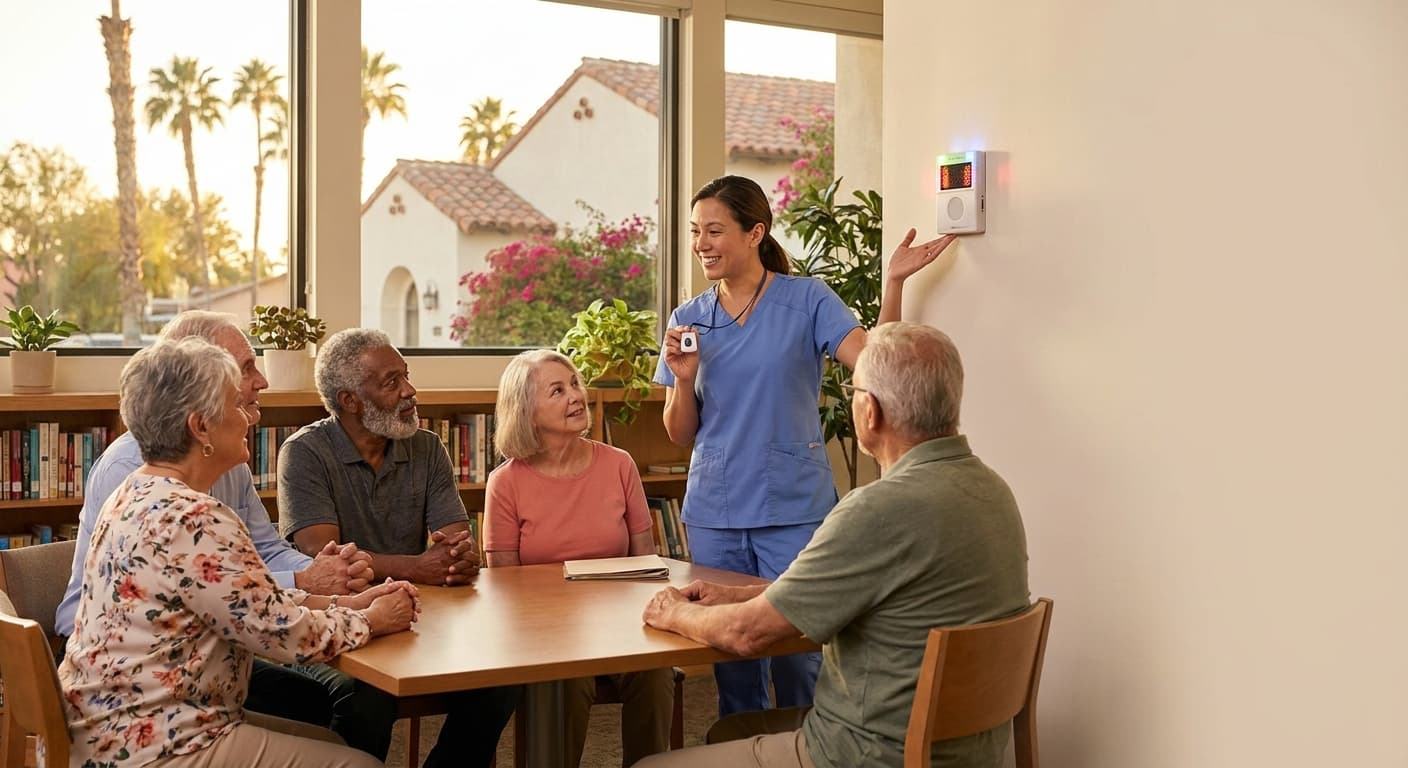
When families tour assisted living communities, they ask about meals, activities, room sizes, and costs. What many don't ask — but absolutely should — is: what happens when something goes wrong medically? What does the community actually do in an emergency?
The honest answer varies significantly from community to community, and understanding it before you commit to a placement is one of the most important pieces of due diligence a family can do.
Assisted living is a residential care setting, not a medical facility. It is not a hospital. It is not a skilled nursing facility. Most assisted living communities are not equipped to provide acute medical care, and residents who experience a medical emergency will typically be transported to a hospital emergency department.
What assisted living communities do provide is staffing around the clock, emergency response systems in each resident's room and bathroom, protocols for recognizing and responding to common emergencies, and care staff trained to assess a situation and call for appropriate help. The quality and speed of that response is what varies.
Most assisted living communities use a combination of wearable emergency call pendants or in-room pull cords and staff monitoring systems. When a resident activates an emergency alert — or when a staff member identifies a resident in distress — the protocol is typically to assess the situation, provide basic first aid or comfort measures, call 911 if warranted, notify the family, and document the incident.
The critical variables: how quickly is the alert responded to? Is there always a nurse on site, or only on call? How are staff trained to recognize the early signs of a stroke, cardiac event, fall injury, or acute infection? These questions have different answers at different communities.
One of the most important staffing questions to ask during a community tour is whether a licensed nurse is physically present in the building 24 hours a day, or whether nursing coverage is on-call. Many assisted living communities have a nurse available during daytime hours and an on-call nurse overnight. Others have licensed nursing staff around the clock.
This distinction matters in an emergency. A care aide can call 911 and provide basic assistance; a nurse on site can assess more accurately, initiate certain interventions, and communicate more effectively with emergency responders. For residents with significant health complexity, the availability of on-site nursing coverage overnight is worth prioritizing.
A frequently overlooked aspect of emergency preparedness is the return-to-community process after a hospitalization. When a resident is discharged from a hospital after a fall, surgery, or acute illness, they may return to the assisted living community needing a higher level of care than they had before. Understanding in advance how the community handles this — whether they can accommodate short-term rehabilitation needs, when they will and won't accept a returning resident, and what the process looks like — prevents difficult surprises at an already stressful time.
Some assisted living communities have relationships with skilled nursing facilities or rehabilitation centers and can facilitate a smooth handoff. Others expect families to manage that coordination independently.
When evaluating a community's emergency preparedness, ask: Is there a nurse physically on site 24 hours a day, or on call? What is the typical response time when a resident activates an emergency alert? Can you walk me through what happens when a resident has a fall or appears to be having a cardiac event? What is your protocol for notifying families in an emergency? What happens if a resident's care needs increase significantly after a hospitalization?
The confidence and specificity of the answers will tell you as much as the content. A community that has clear, practiced answers to these questions is one that takes emergency preparedness seriously.
Emergency response protocols aren't always listed in community brochures, and they're rarely top of mind during a tour that's focused on amenities and pricing. YourPath advisors have visited and evaluated communities across the country and can help families identify the right questions to ask — and know what good answers look like. That guidance is available at no cost to families.
Take our free assessment to get matched with senior living communities tailored to your needs, budget, and location.
Take Our Free AssessmentAssisted living contracts are lengthy, complex, and binding. Knowing what to look for — and what questions to ask — before signing can prevent costly surprises down the road.
Touring an assisted living community? Don't go without a plan. Here are the most important questions to ask staff, administrators, and yourself during a community visit.
The first month in assisted living is an adjustment for residents and families alike. Knowing what's normal — and what to watch for — makes the transition significantly easier.
Get expert articles, community spotlights, and senior care resources delivered to your inbox.
We respect your privacy. Unsubscribe anytime.