An estimated 7 million Americans are long-distance caregivers — people managing the care of an aging parent or relative from more than an hour away. Distance doesn't reduce the responsibility or the worry. It compounds them. Every phone call where a parent seems confused, every fall that you hear about after the fact, every medical appointment you can't attend adds to a baseline anxiety that is genuinely hard to sustain.
There is no perfect system for long-distance caregiving. But there are approaches that work better than improvising, and putting them in place before a crisis forces the issue makes a significant difference.
The most important thing a long-distance caregiver can do is identify and cultivate people who are physically close to the parent. This network might include: a neighbor who is willing to do regular check-ins and call if something seems off, a local friend or member of a faith community who visits regularly, the parent's primary care physician (and their staff), and any local family members — even those who aren't primary caregivers.
These relationships don't replace professional care, but they provide eyes and ears that no amount of phone calls can replicate. A neighbor who notices the mail isn't being collected or the lights aren't going on at the usual time is an invaluable early warning system.
Long-distance caregivers often have a fragmented understanding of their parent's health — pieced together from what the parent chooses to share, which is usually a curated and optimistic version. Getting a clearer picture requires some deliberate effort.
With the parent's consent, establishing communication directly with the primary care physician — either through a signed release or by attending appointments via phone or video — gives you access to a more accurate assessment. Understanding the current diagnoses, medications, and functional limitations in clinical terms helps you make better decisions when things change.
Medication management is a specific area worth paying attention to. Missed or doubled doses are among the most common causes of preventable health events in older adults living alone. Automatic pill dispensers, pharmacy blister packs, or a home care aide who handles medication setup can address this without requiring daily family oversight.
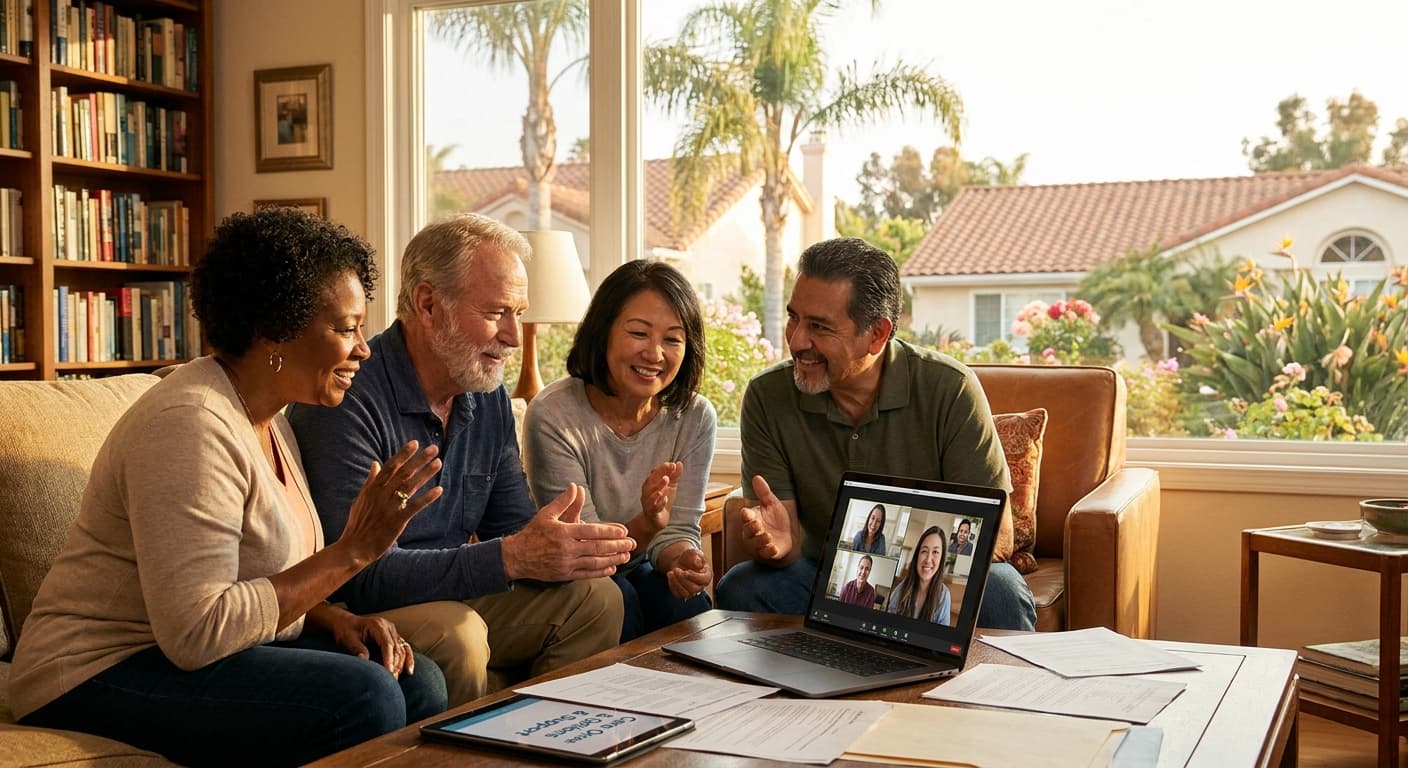
Technology can extend a long-distance caregiver's ability to monitor safety and maintain connection. Video calls — FaceTime, Zoom — provide visual contact that phone calls don't. Medical alert systems give a parent a way to summon help if they fall or feel unwell. Smart home sensors can monitor movement patterns and alert family members if something is unusual (no movement by a certain time of morning, for instance).
The right technology depends on the parent's tech comfort and the specific risks you're trying to manage. The goal is a system the parent will actually use — not one that sits unused because it's too complicated.
Home care aides — whether for a few hours a week of companionship and help with errands, or for more regular personal care support — are often the most practical solution for long-distance caregivers who can't be present themselves.
A geriatric care manager is worth considering for families managing complex situations from a distance. They can conduct regular in-person check-ins, accompany the parent to medical appointments, communicate findings to the family, and coordinate among providers — essentially acting as a local professional advocate for the parent's care.
Long-distance caregiving has a natural limit. When a parent's care needs exceed what a remote network and periodic visits can safely manage — when there are repeated falls, significant cognitive decline, medication errors, or clear signs of unsafe living conditions — it's time to have a serious conversation about whether the current arrangement is still working for everyone, including the parent.
This is often the moment families begin genuinely considering senior living as an option rather than a last resort. YourPath advisors work with long-distance families regularly and can help assess the situation, identify appropriate care options, and manage much of the research and evaluation process remotely.
Find Your Perfect Community
Take our free assessment to get matched with senior living communities tailored to your needs, budget, and location.
Take Our Free Assessment